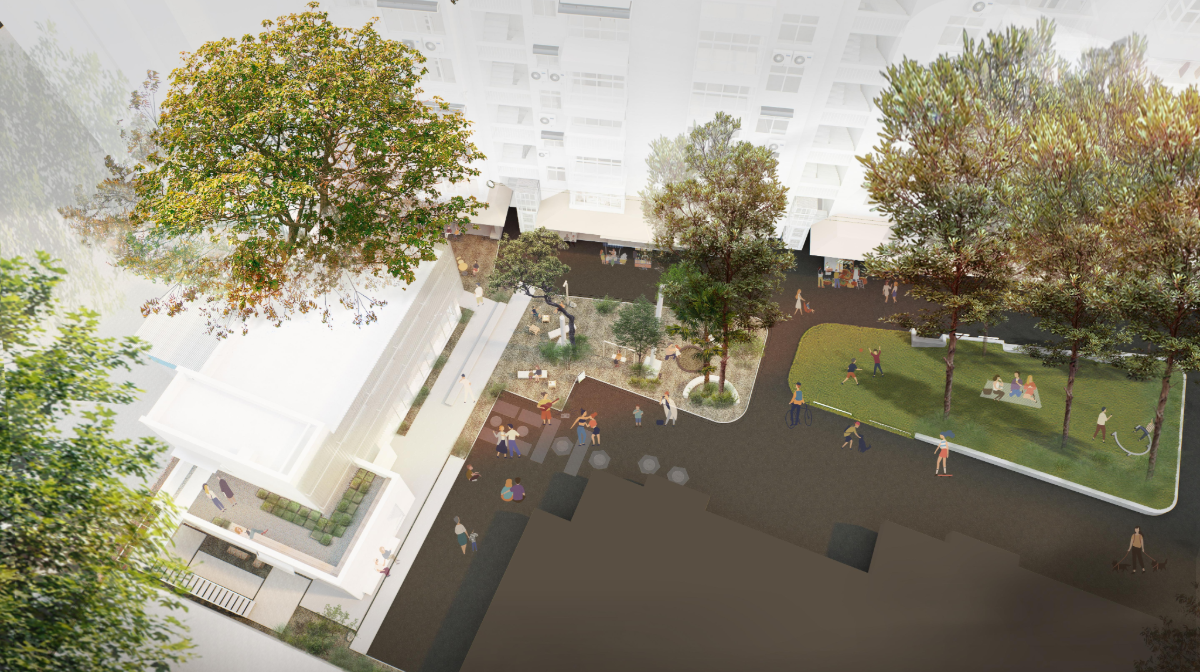
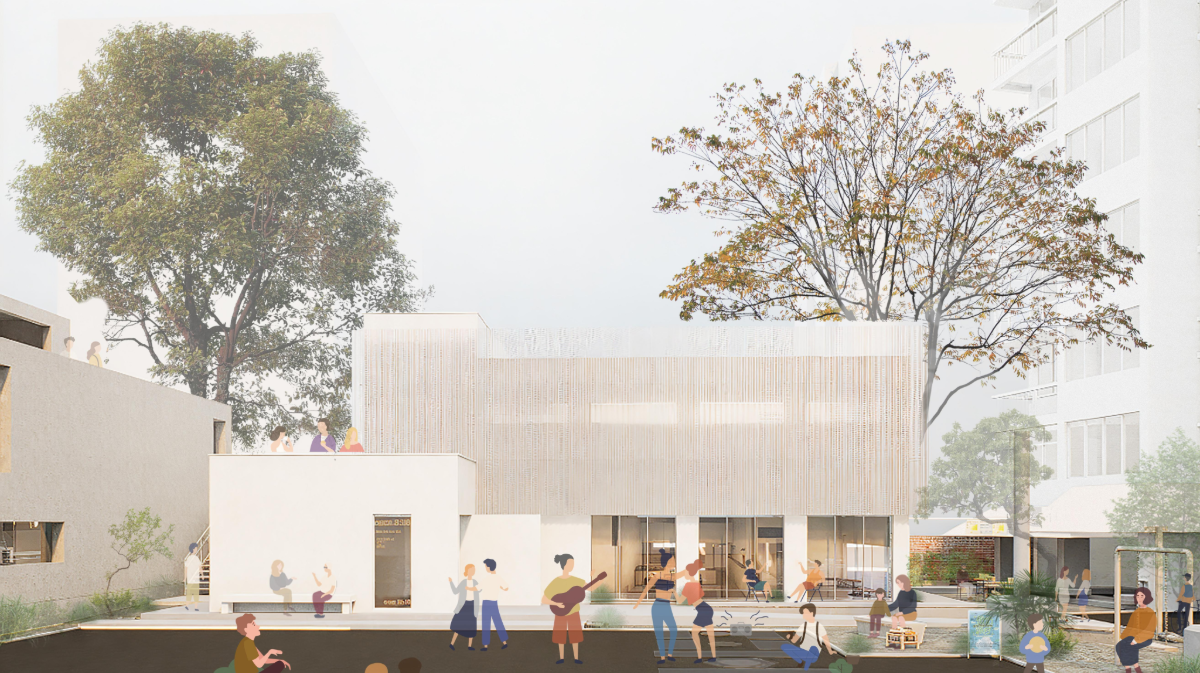
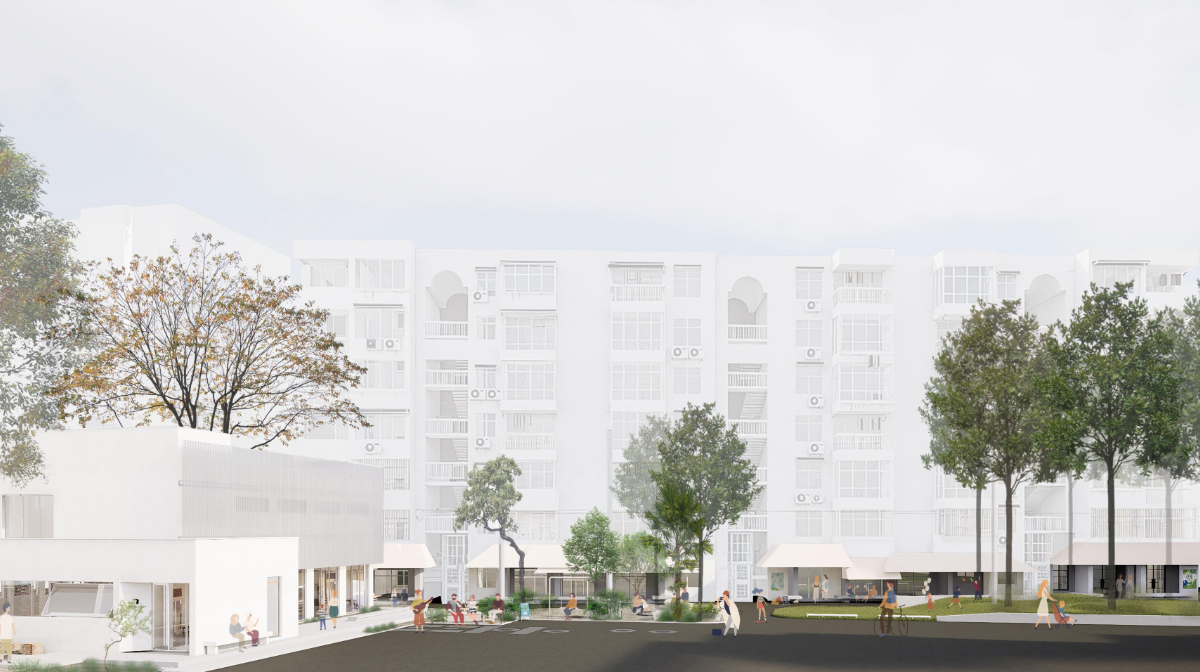
view more

Reunification of the“DAYUAN”
重返“大院”

Park as Method: Co-constructive Neighbourhoods
把公园作为方法
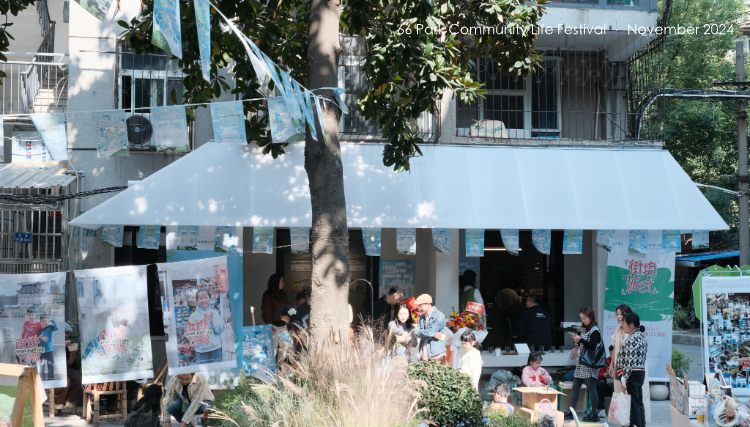
What is a “Dayuan”
什么是“大院”
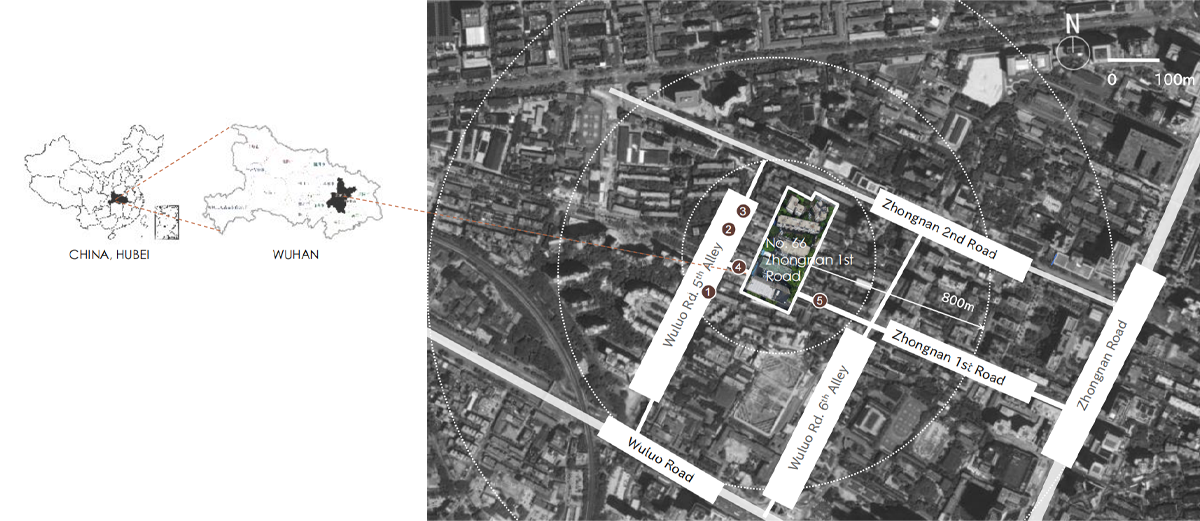
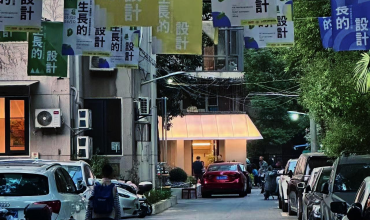
Located on Zhongnan 1st Road in Wuhan, China,the No. 66 Zhongnan Community sits within a district once home to government offices and research institutes during the planned economy era. This area still retains the typical “Dayuan traces”—an enclosed spatial structure that also fostered dense, inward social networks. As China undergoes rapid urbanization, such interwoven spaces, where old institutional forms meet new urban fabrics, continue to persist in resilient and often overlooked ways.
中南一路66号社区位于中国武汉市中南一路,中南片区曾是计划经济时代政府机关和科研机构的集中地,保留着典型的“大院痕迹”。这种“大院”不仅是空间形态上的围合,更是社会关系上的紧密网络,随着中国快速城市化的推进,在新的城市肌理,这种新旧交织的空间和社会网络依然顽强存在。
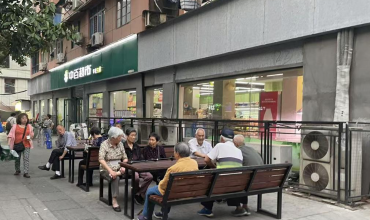
xiangshang Fifteen-Minute Living Circle: Everyday Life Scenes / 十五分钟生活圈日常生活场景
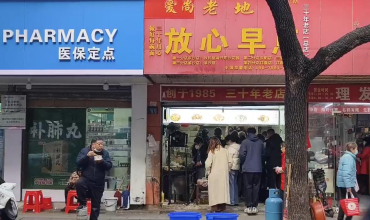
Wuhan Food Culture: "Guozao" (Wuhan-style early breakfast culture) on Red Stools / 武汉饮食文化,红色板凳“过早”
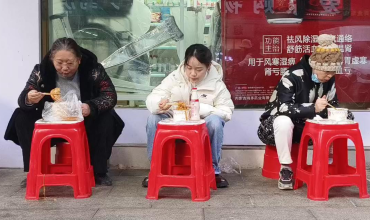
Wuhan Food Culture: "Guozao" (Wuhan-style early breakfast culture) on Red Stools / 武汉饮食文化,红色板凳“过早”
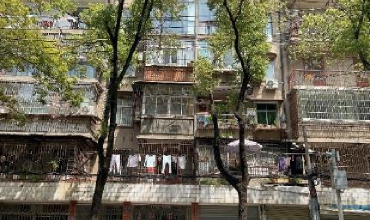
Fifteen-Minute Living Circle: Streetscape and Urban Atmosphere / 十五分钟生活圈街景风貌
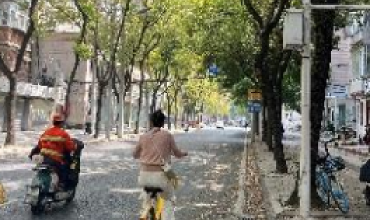
Fifteen-Minute Living Circle: Streetscape and Urban Atmosphere / 十五分钟生活圈街景风貌
We chose the No. 66 Zhongnan Community as a “typical cross-section” to examine this unique urban texture, exploring how spatial and social design might restore public space and rebuild neighborhood ties in the face of ongoing urban transformation.
我们选择中南一路66号社区作为“典型切片”,聚焦于这一独特的城市肌理,探索在城市化背景下,如何通过空间与社会设计修复公共空间,重建邻里关系。
Spatial Composition 空间构成:
Red brick walls, front-factory-back-residence layout, centralized communal
facilities
红砖围墙、前企后宅、集中式配套
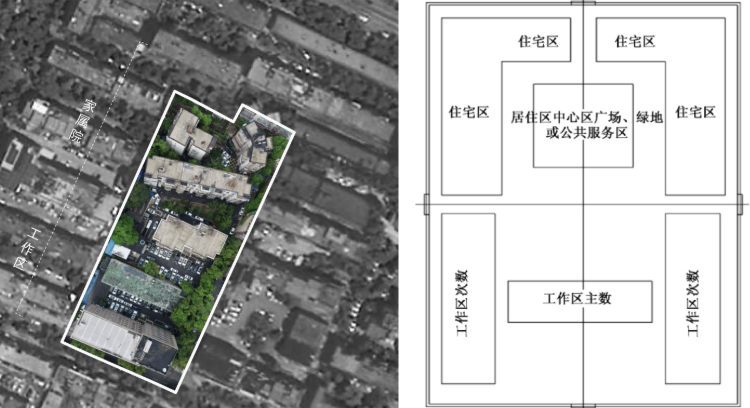
▲ No. 66 Zhongnan 1st Road Community
中南一路66号社区大院
▲ Traditional Dayuan Spatial Pattern
传统大院空间格局
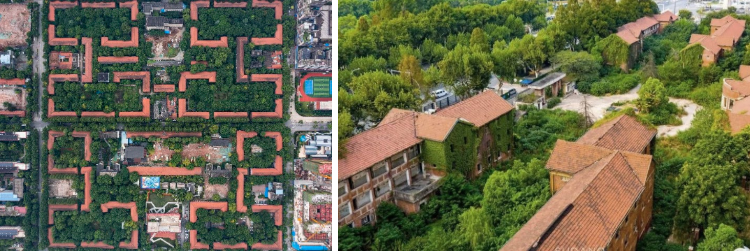
▲ Source pf Image: 1997 residential compound of Wuhan Qingshan Iron and Steel Plant
图片来源于1997年武汉青山钢铁厂居住社区
The work-unit Dayuan consists of a work zone and a residential zone for staff families. The work zone varies by function: industrial work-unit Dayuan mainly includes a production area and an office area; non-industrial Dayuan is composed of a main office building and auxiliary office buildings. The residential zone mainly includes four parts: housing (dormitories), public green spaces, public service facilities (kindergarten, canteen, clinic, boiler room, basic commercial services, etc.), and roads and plazas.
单位大院由工作区和家属院区组成。
工作区根据不同职能有所不同,工业类的单位大院主要由生产区与办公区组成;非生产性的单位大院由主办公楼,辅助办公楼组成。家属院区主要由四部分组成:住宅(宿舍)、公共绿地、公共服务设施(幼儿园、食堂、卫生所、锅炉房、商业服务等)
及道路广场组成。
Emotional Dimension 情感维度:
A “community” shaped by a network of acquaintances and collective identity
一种熟人所构成的关系和集体相统合的"共同体”
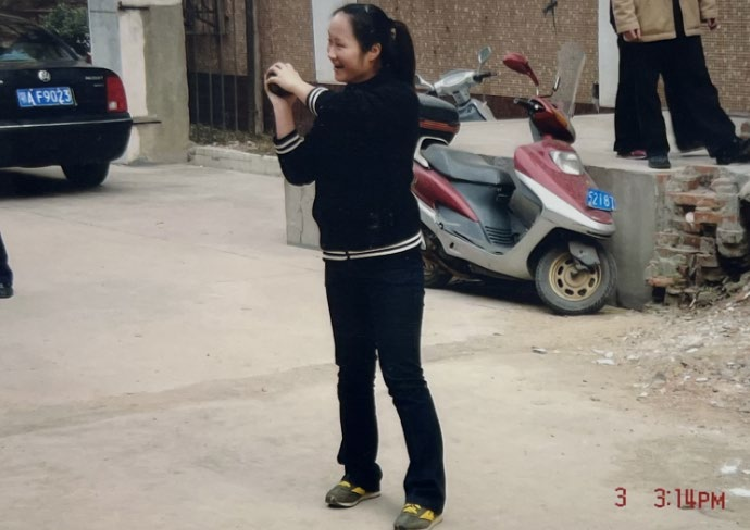
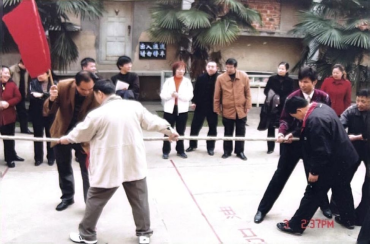
1999: Shot put competition organized by the work unit within the Dayuan / 1999年,大院内由单位组织的员工铅球大赛
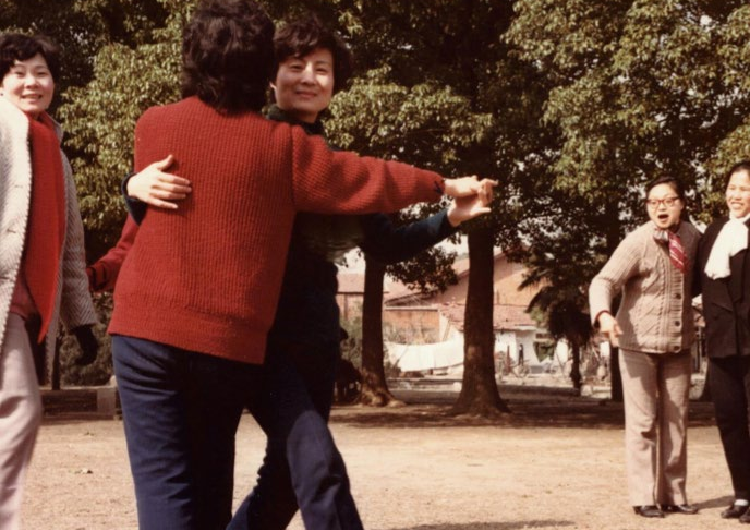
1989: Social ballroom dance held for International Women’s Day / 1989年,举办三八妇女节交谊舞联谊活动
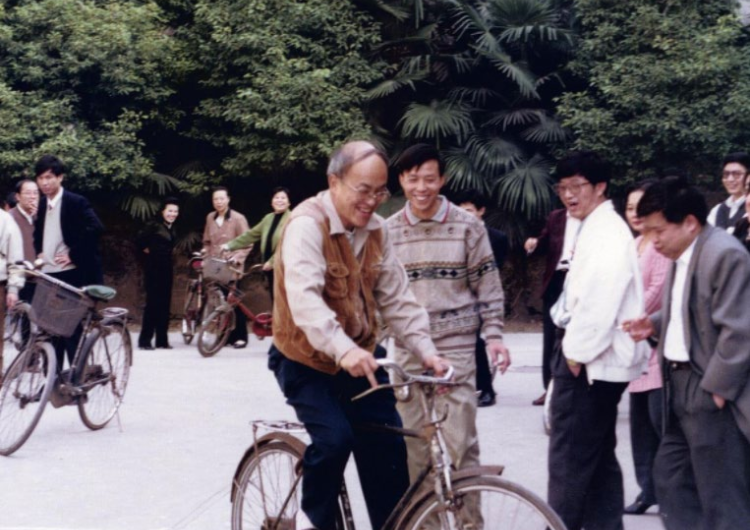
1995: Fun bicycle balance race—slow cycling without touching the ground / 1995年,慢骑自行车,脚不沾地趣味运动会
By reviewing historical archives of the No. 66 Dayuan, we observe that under the planned economy system, the Dayuan was not only a residential space but also a vessel of social relationships. In this context, individuals were not narrowly defined by labels, allowing personal value to emerge more vividly. Spontaneous daily interactions gradually accumulated into precious collective memories.
通过翻阅66号大院历史资料窥探到,在计划经济制度下,大院不仅是居住空间,更是社会关系的载体,个人的非标签化,使得人的价值鲜明,自发形成的日常互动逐渐沉淀为珍贵的集体记忆。
Our “Dayuan”
我们的大院
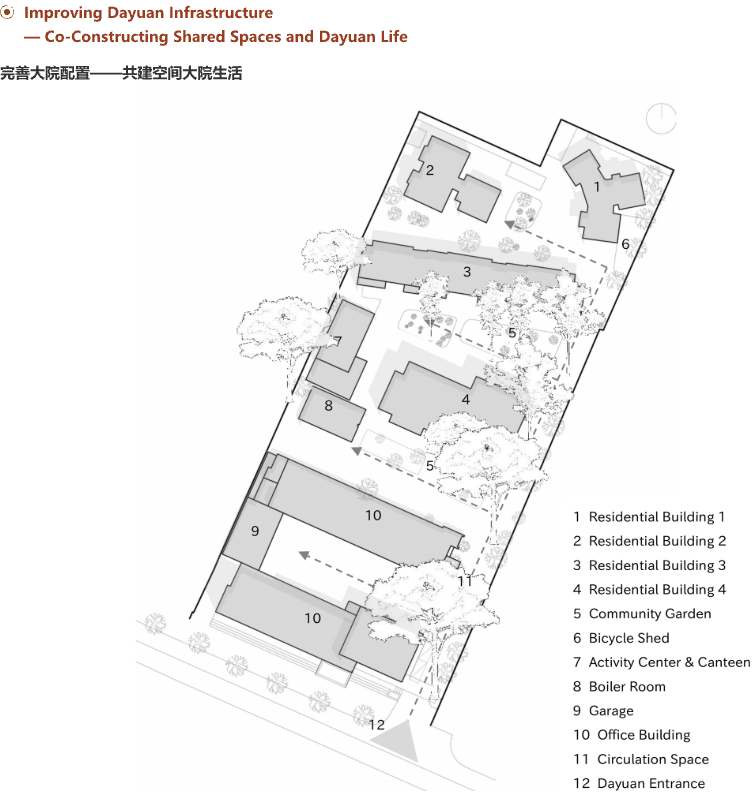
▲ 1977-2000 The Growth of Dayuan 大院生长
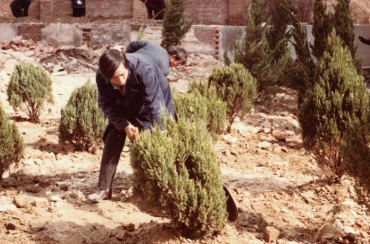
⑤Community Garden Co-built by Unit Employees
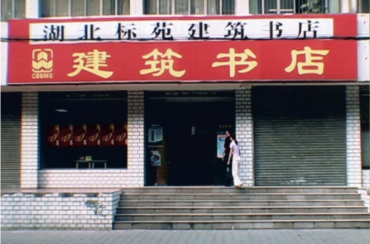
⑩Street-facing Shops on the Ground Floor of the Office Building
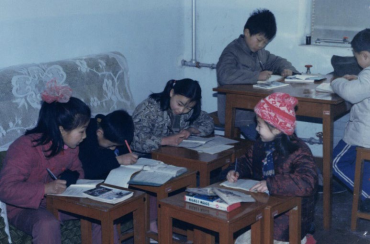
⑦After-school Activity Center for Dayuan Children
⑪Vibrant Inter-building Courtyard Plaza
As the construction of the Dayuan gradually progressed, its spatial organization came to reflect the behavioral logic of the work-unit community in the market economy era. Two main office buildings enclose a central plaza, forming the core work zone. Three residential blocks are arranged in a triangular layout, creating a clustered living area. Between them are three inter-building green spaces, within which six community gardens are embedded, along with integrated public facilities such as a staff canteen, activity center, and boiler room. These are connected through a looping circulation network, forming a “production-living-leisure” spatial structure which is highly interwoven.
随着大院建设的逐渐完善,空间组织的演变映射了计划经济时代单位共同体的行为逻辑——以两栋办公主楼围合的中心广场构成核心工作区,三栋住宅单元呈品字形分布形成居住组团,其间嵌入三处宅间绿地(内含六个社区花园)及复合型公共设施(职工食堂、活动中心、锅炉房),通过回游式路径网络串联,形成"生产-生活-休憩"高度耦合的空间结构。
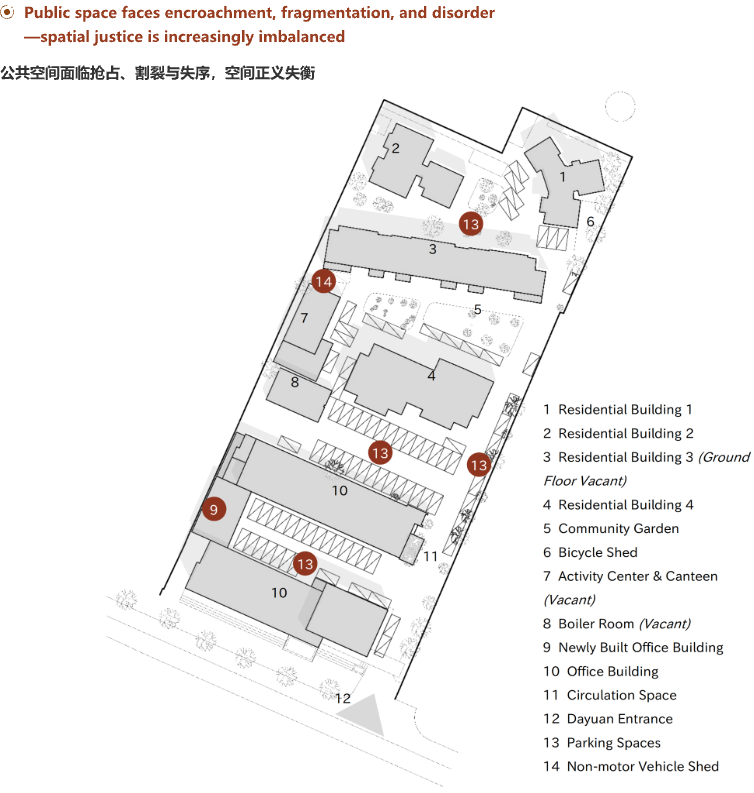
▲ 2000-NOW Erosion of Dayuan 大院消逝
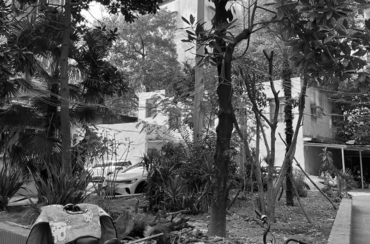
Garden left unattended and unused
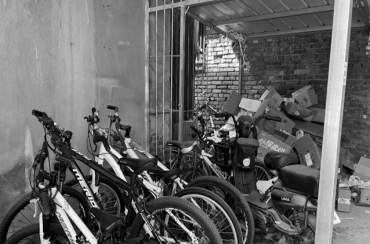
Lack of function leads to scattered parking

Ivy grows freely along Dayuan walls
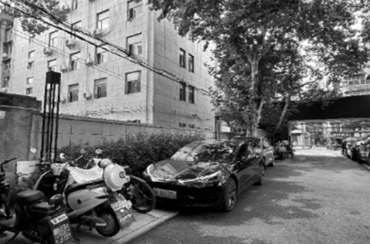
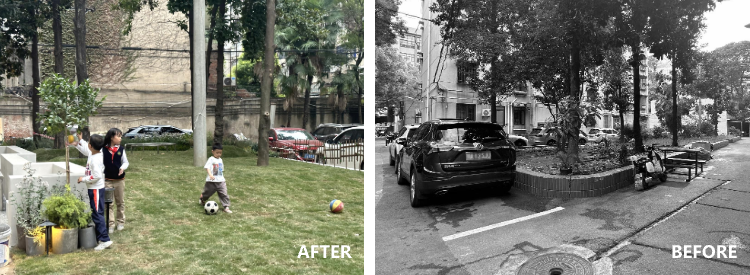
Public space occupied by vehicles
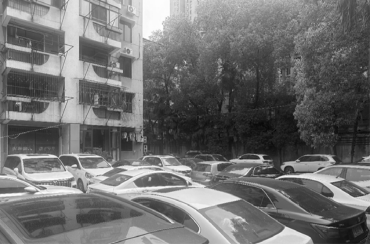
Flower beds removed for parking needs

Camphor trees form a natural screen
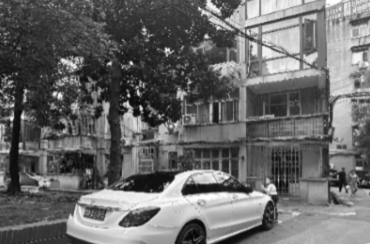
Ground-floor units vacant due to poor conditions
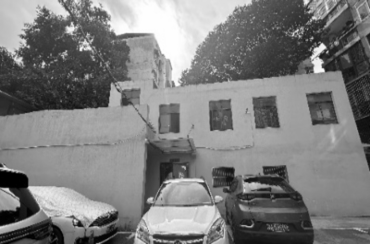
Activity center replaced by better nearby facilities
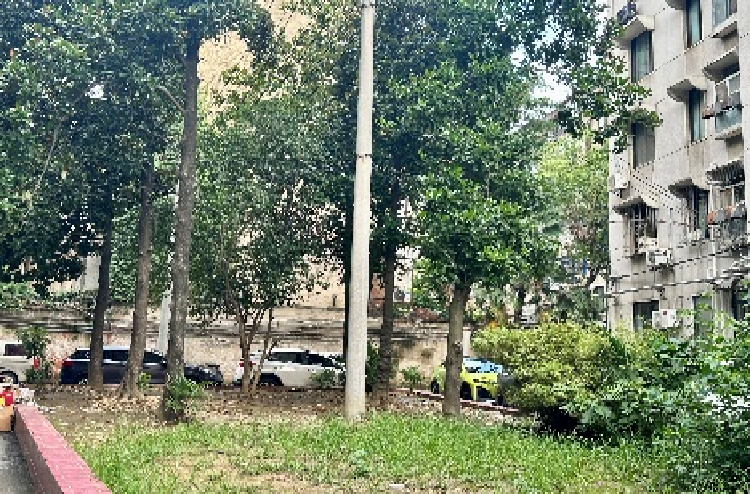
Magnolia trees create a naturally enclosed garden space
Fragmented Ownership 产权碎片化:
Following the restructuring
of former public institutions into enterprises, the Dayuan
shifted from a “work-unit-led social model” to market-oriented operations, resulting in a dual-entity
structure of
enterprise and individual residents.
转企改制后,原事业单位大院从"单位办社会"模式转向市场化运作,形成"企业-居民"双重主体。
Fragmented Governance 治理边界化:
After the institutional
reform, property management was split between unit-run companies
and residential committees, leading to unclear responsibilities and a “ tragedy of the commons ”,
exemplified by illegal
construction and the takeover of shared space for parking.
单位改制后,单位物业公司、小区业委会两级分化,权责不清,导致违建、停车场侵占等“公地悲剧”。
Spatial Instrumentalization 空间工具化:
Short-term tenants
drawn by market-driven housing and education privileges have
intensified the instrumental use of space, weakening residents’ sense of belonging and spatial identity
市场化学期房吸引短期住户,通过住房市场购买教育特权的行为,加剧空间工具化,削弱居住认同。
The dilemma of “Dayuan”
大院的困境
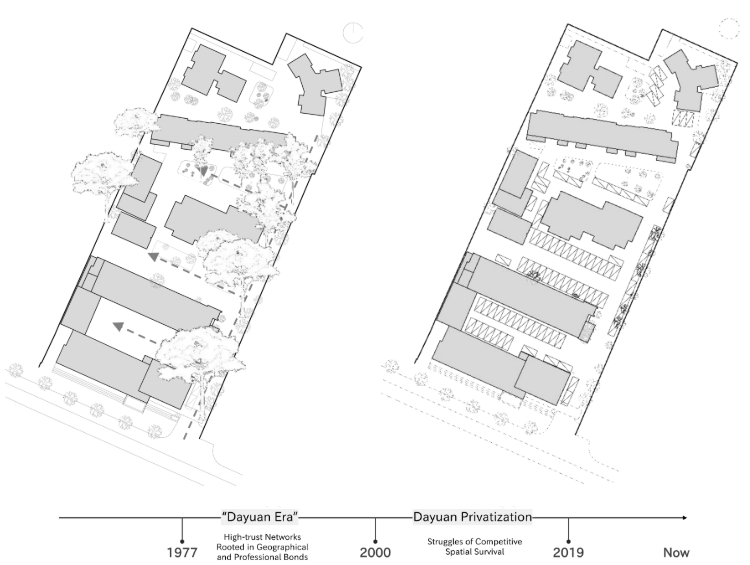
▲ Spatial Fragmentation Amid Disordered Urban Logic 秩序错乱下的空间割裂
Looking back at the spatial evolution of the Dayuan, as residents' needs have grown and shifted, public spaces have increasingly faced encroachment and disorder. Some office areas, residential units, and communal zones have fallen into disuse, while others are subject to competitive occupation. This fragmentation under disrupted spatial order has led the community into a condition of “survival through spatial contention”.
回看大院的发展演进历程中,随着人们的需求更新增长,公共空间面临抢占失序,部分办公场所、住宅单元及公共区域则呈闲置状态,这种秩序错乱下的空间割裂使社区面临抢占式生存困境。
The Loss of Memory and Social Warmth Under Fragmented Space
空间割裂下的记忆消失和关系冷漠:
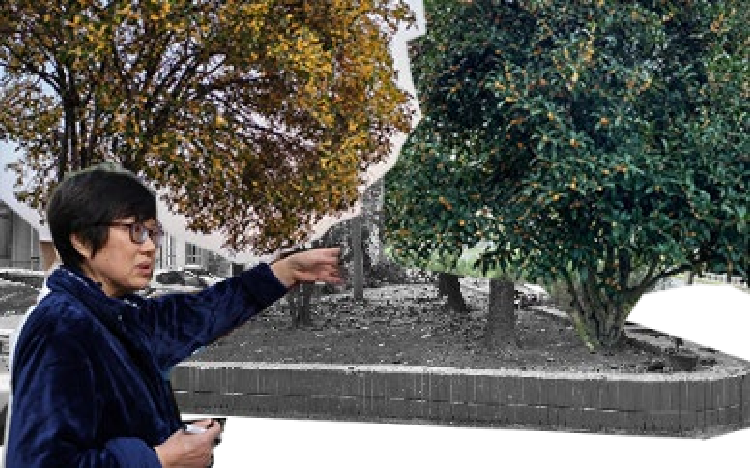
Retired Dayuan residents recall the scent of osmanthus once filling the courtyard, and scenes of neighbors sharing public space in the garden.
As public spaces are increasingly occupied by private functions, people begin to overlook their surroundings, missing moments of spontaneous encounter — collective memories fade away.
公共空间被私有功能占据,居民对社区风景忽视、失去偶遇场景,集体记忆消失
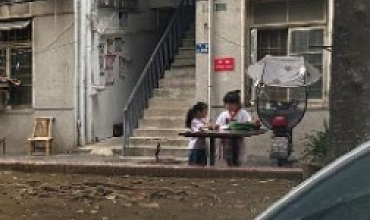
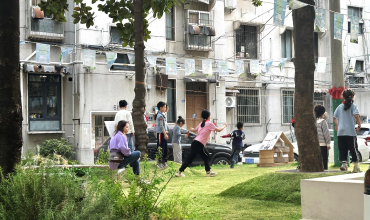
Primary school students doing homework.
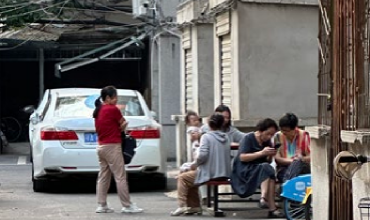
Elderly residents chatting.
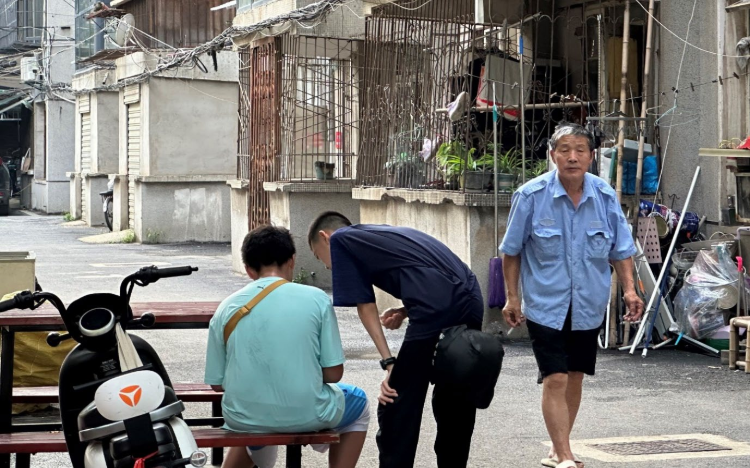
Today, a student anxiously looking for a friend’s address while sitting on a bench would no longer consider asking nearby residents for help.
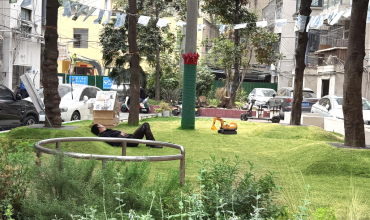
Even the only public bench in the Dayuan still fosters a variety of spatial behaviors. Yet, as different groups—retired former staff, new middle-class homeowners (school district buyers), and younger tenants—take turns using the space, they remain strangers to each other. Social ties grow colder.
大院里唯一一把公共长椅产生许多空间行为,但社区内不同群体:原职工(退休老人)、新中产(学区购房者)、新员工(租户)交替使用公共空间。却互不认识,关系冷漠。
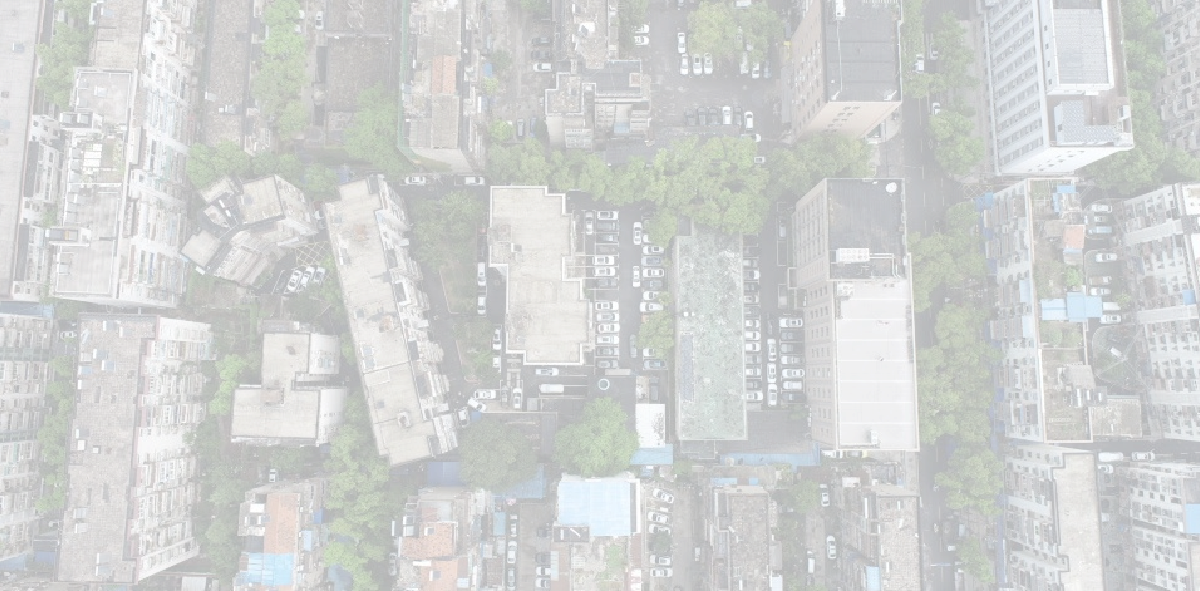
Yet under growing private demands, unregulated occupation fragments the space,
erases shared memories, and weakens social bonds.
私人需求激增下的无序抢占,导致空间割裂,记忆消逝与群体关系冷漠。
The publicness of the community is fading.
Public space urgently needs to be restructured.
社区公共性式微公共空间驱需重构
Vision and Strategy
愿景策略
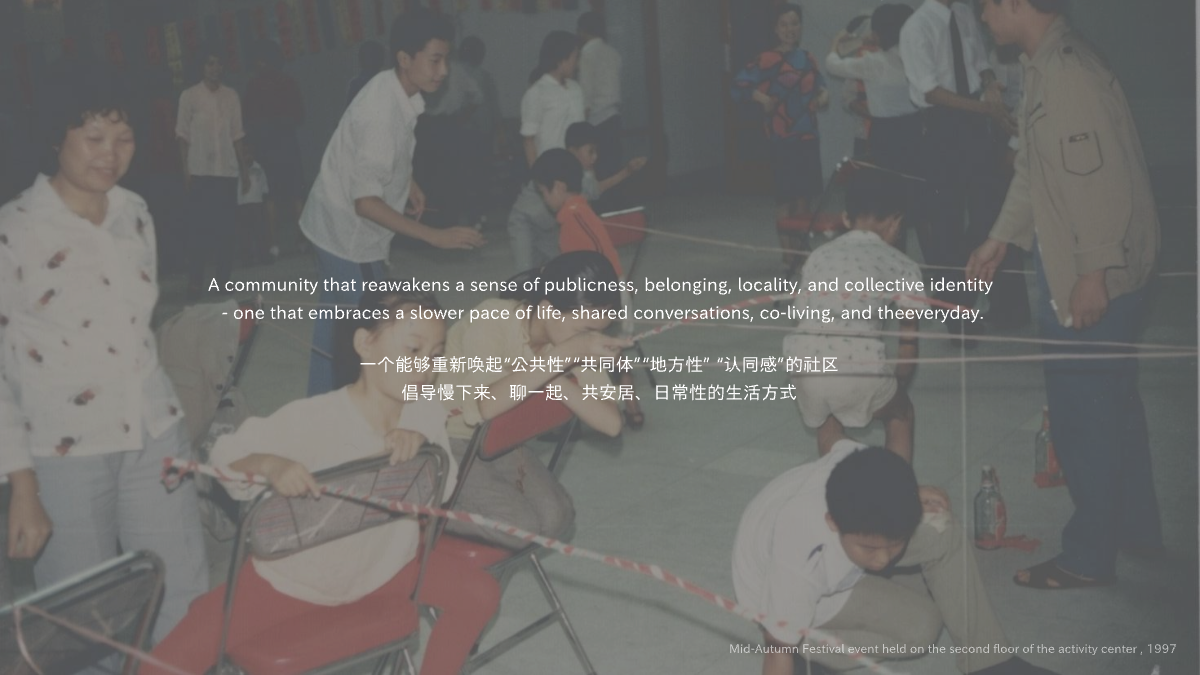
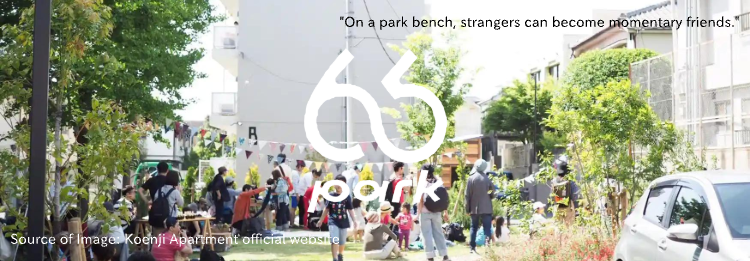
The park fosters community recognition through everyday encounters, as an interactive
platform that organizes social
networks. It also serves as a spatial medium for regenerating publicness within micro-scale urban
updates. By adopting
the park as a method, this approach seeks to reconstruct public space and revive a Dayuan lifestyle
rooted in warmth and
belonging.
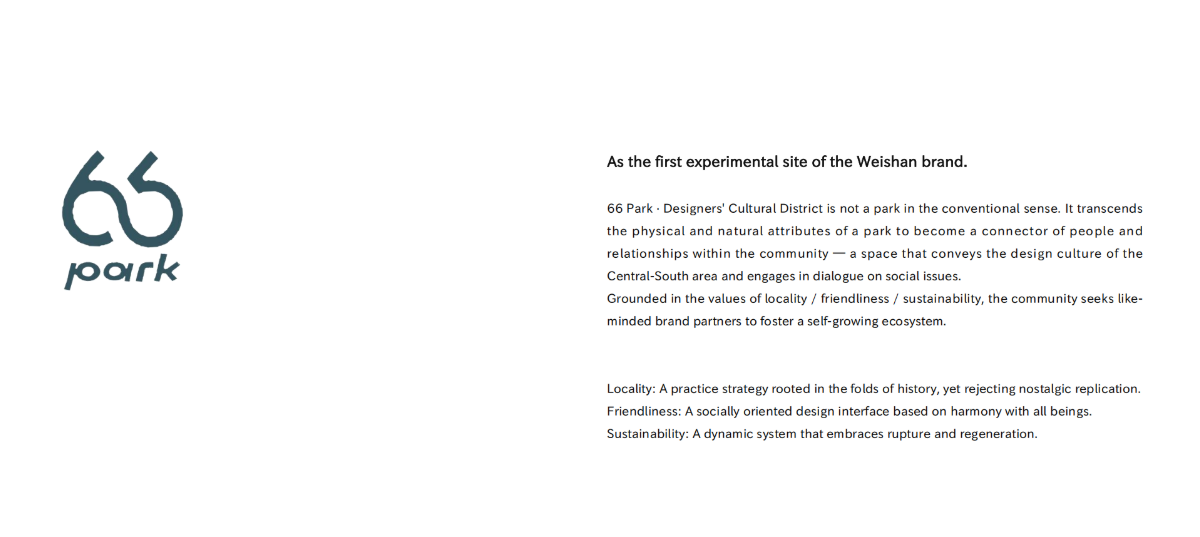
This leads to the proposal of the concept: "No. 66 Park" — not a park in the conventional
sense, but one that
transcends its natural and physical form to reconnect people and proximity within the community.
公园作为组织社会网络的互动平台,通过日常交往凝聚社区认网,同时以空间载体支撑微更新中的公共性再造,把公园作为方法,通过重构公共空间,以期重返充满温情和归属感的大院生活方式。提出“66号公园”的概念--非广义上的公园,超出公园自然物理属性,链接社区人与人的附近
Regeneration Strategy
更新路径
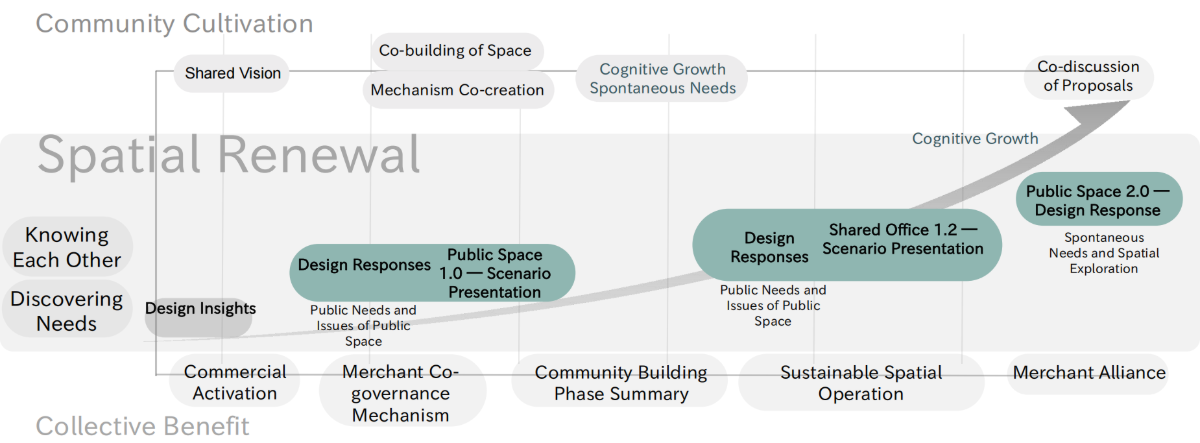
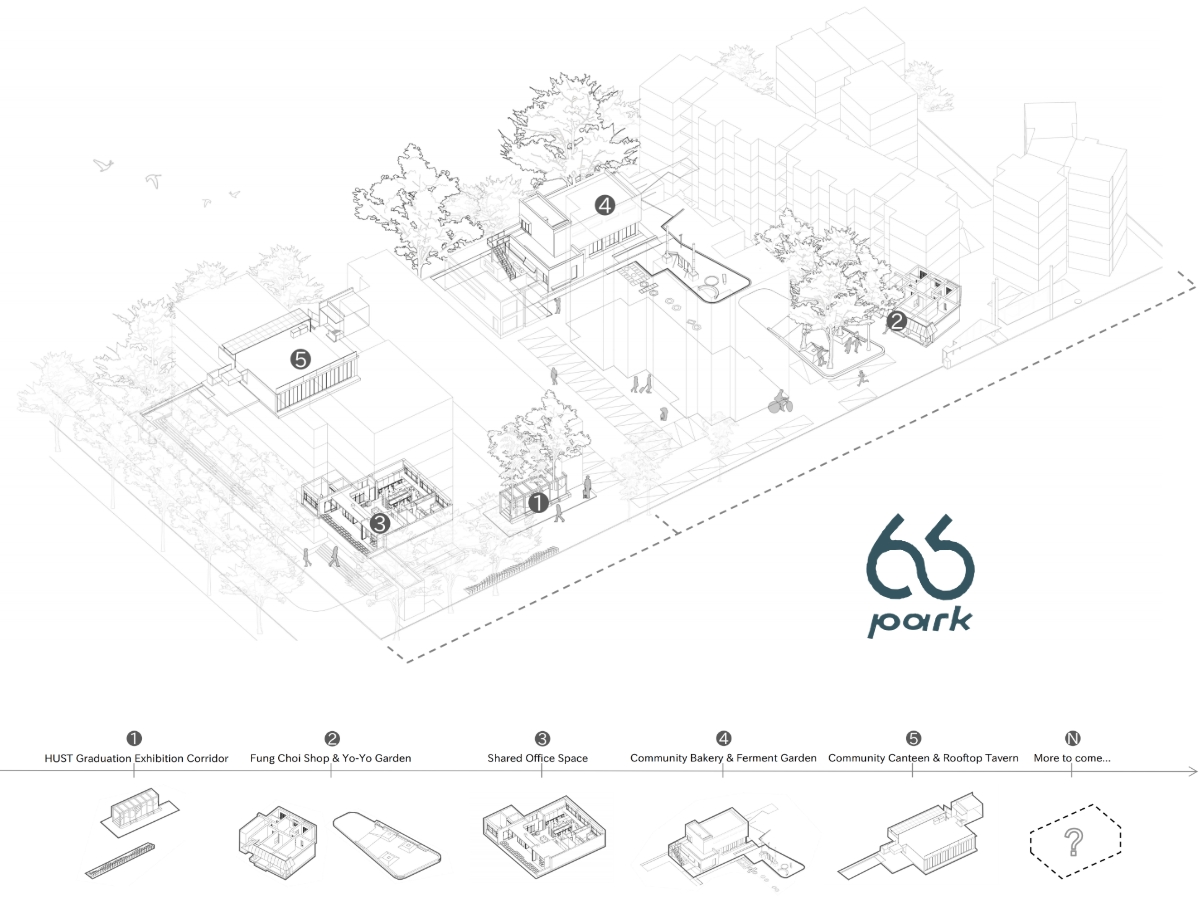
Through the interweaving of social relationships and spatial design, the 66 Park initiative
follows an action path of
community cultivation,spatial renewal, and multi-stakeholder co-benefit.
This participatory
co-creation
process supports
the gradual unfolding of a shared cognitive journey toward building the identity of 66 Park — a
collective project
shaped and grown together.
通过关系与空间相互交织,以社区培育、空间更新、多方共益的行动路径,共同完成66号公园的认知生长过程,以参与式共创的方式逐步推进的66号公园共建计划。
▼ Key Milestones in the 66 Park Renewal Initiative 66公园更新行动大事件
April / August 2024 — Getting to Know Each Other:
Exploring Real-Life Work and Living Issues
2024年04月/08月 —
认识彼此,寻找工作与生活的真实议题
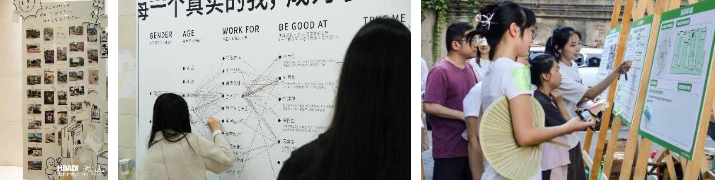
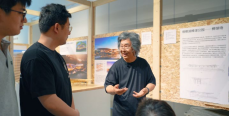
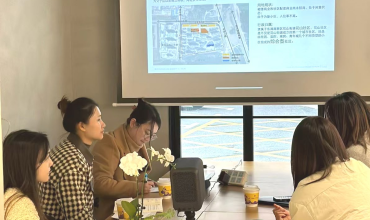
Action: Two open dialogue events were held to connect designers with residents, uncovering diverse individual needs and ways of using space
行动:通过两场开放日畅聊活动,连接设计师与居民群体,探索多元个体的自我需求与空间使用需求。
August 2024 — Designing for Real Issues on Site
2024年08月 — 设计解决场地真实议题
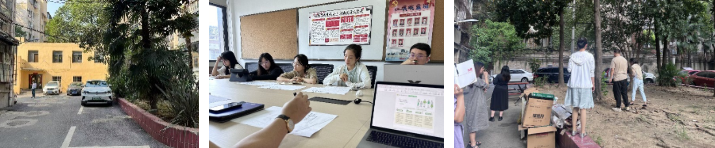
Action: During the design phase, designers translated shared needs and spatial imaginations into design language.
行动:在设计阶段,设计师将彼此的需求以及对空间的畅想通过设计的语言呈现出来。
September 2024 — Community Co-creation: Everyone as a
Designer
2024年09月 — 社区共创,人人都是设计师
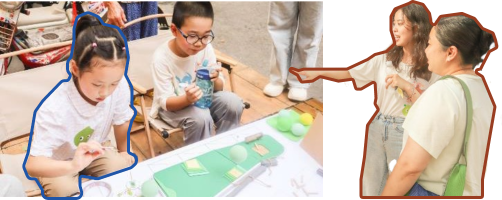
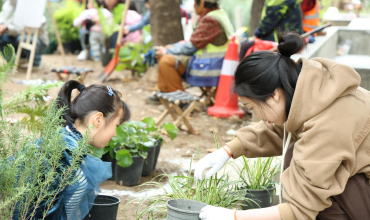
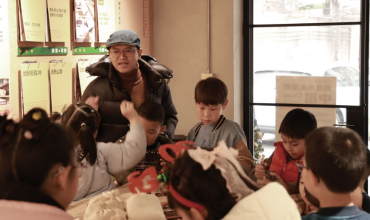
Action: In the proposal phase, a collaborative model-making workshop brought together multiple groups to co-build a model of the perception. community garden and explore spatial
行动:在方案阶段以模型共创工作坊活动持续链接各类群体,共同搭建社区花园空间模型,感知空间
October 2024 — Co-developing Mechanisms: Building the
Yo-Yo Garden at No. 66 Together
2024年10月 — 机制共议,共建66号友友花园

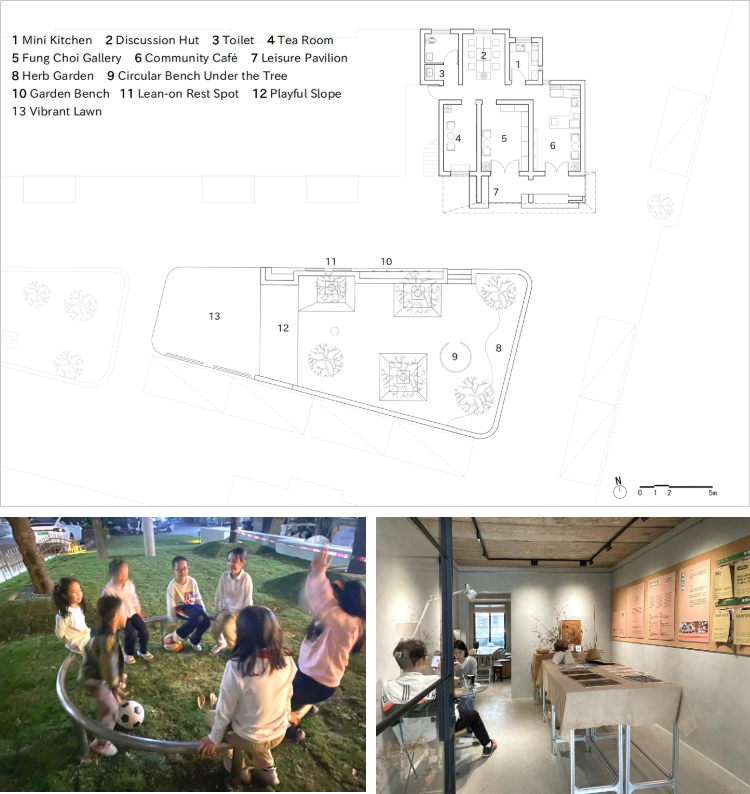
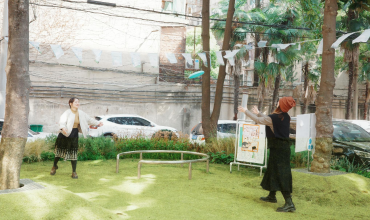
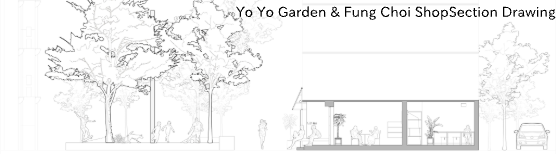
Action: During the implementation phase, designers, residents, operators, and the homeowners’ committee jointly built the Yo-Yo Garden and discussed long-term maintenance strategies.
行动:在空间实践阶段,与运营方、社区居民、设计师、业委会等群体共建友友花园、共议维护运营机制。
November / December 2024 — From Spatial Imagination to
Everyday Reality
2024年11月/12月 — 从空间畅想到具体的真实
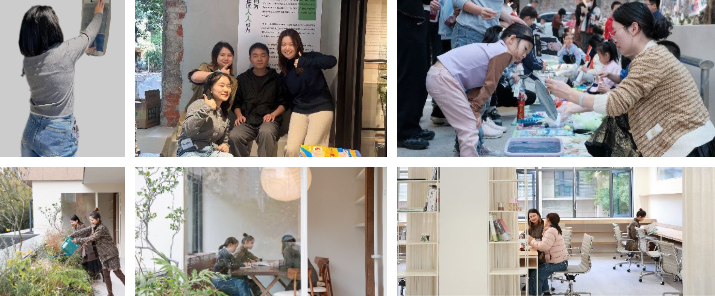
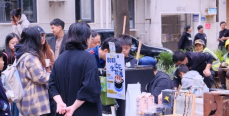
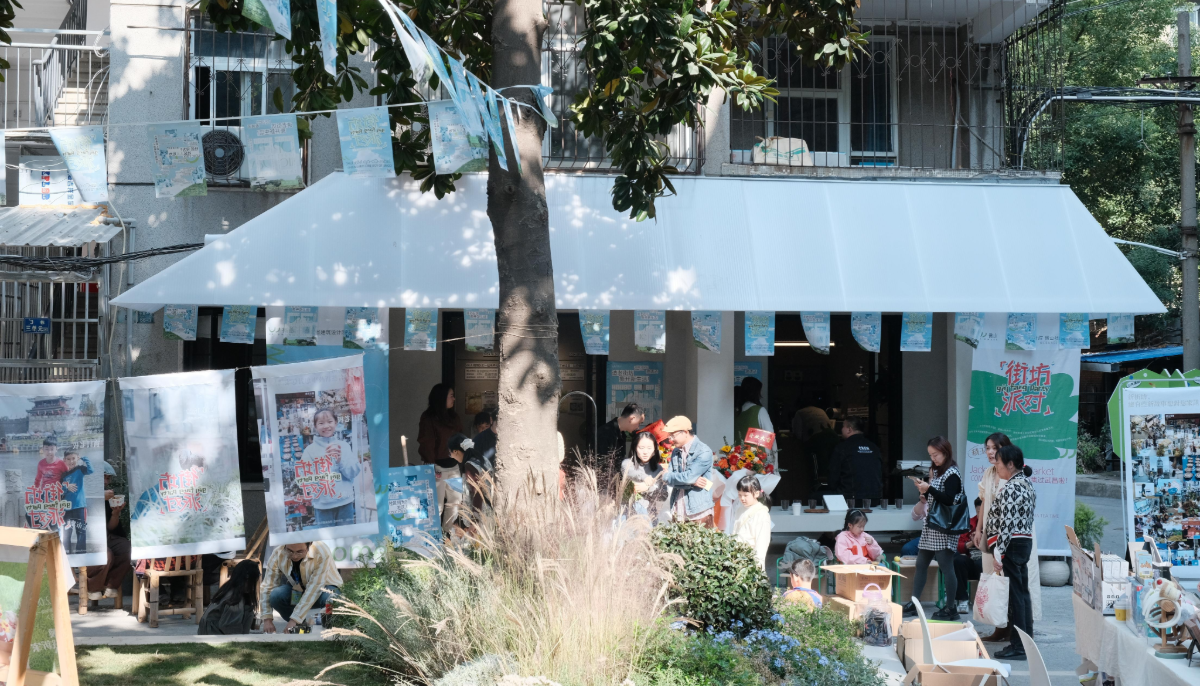
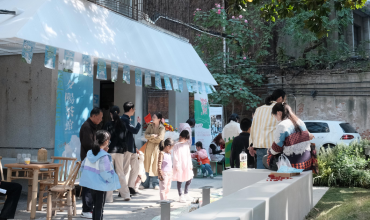
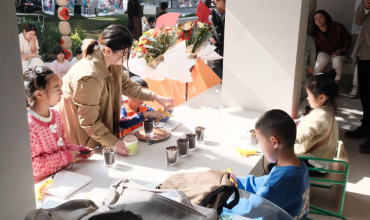
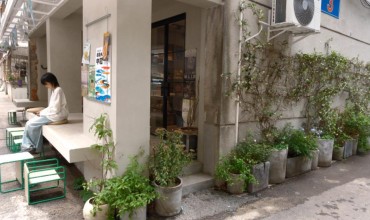
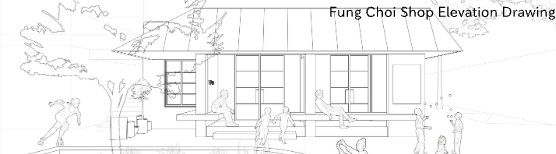
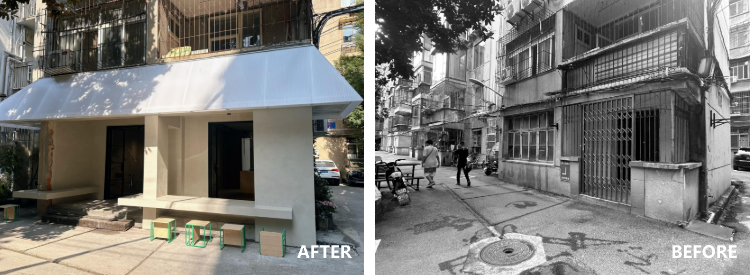
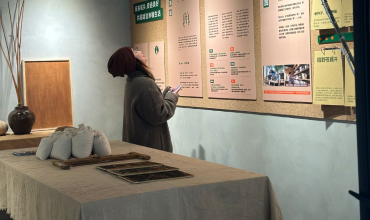
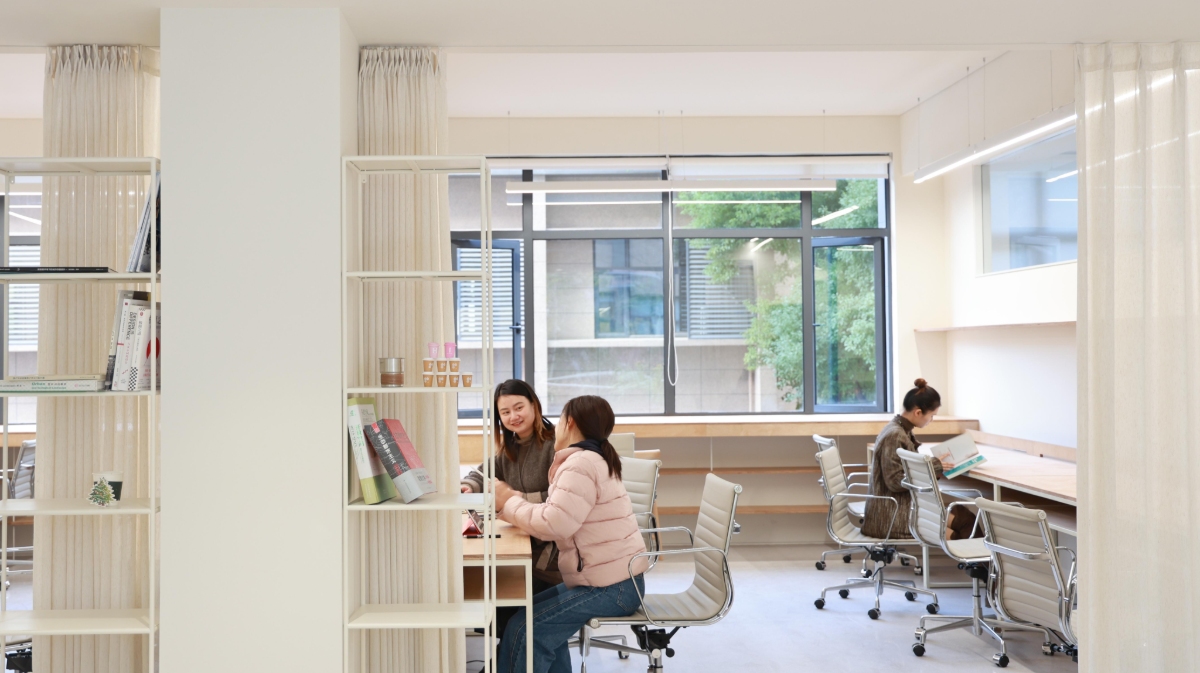
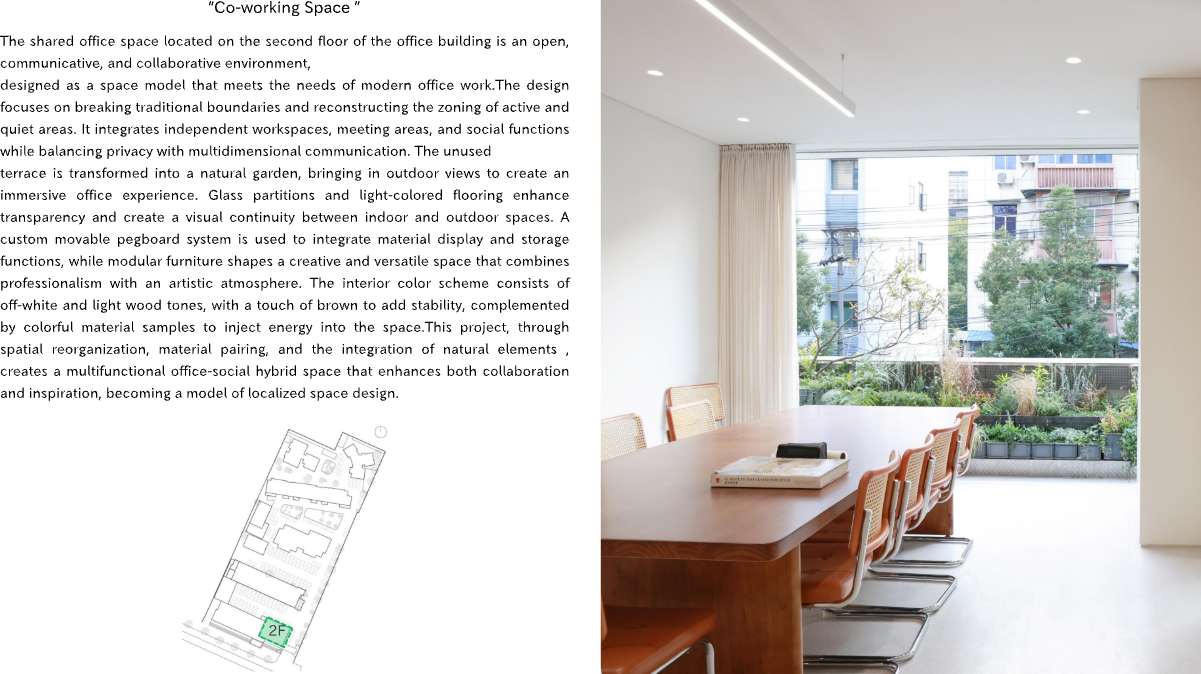
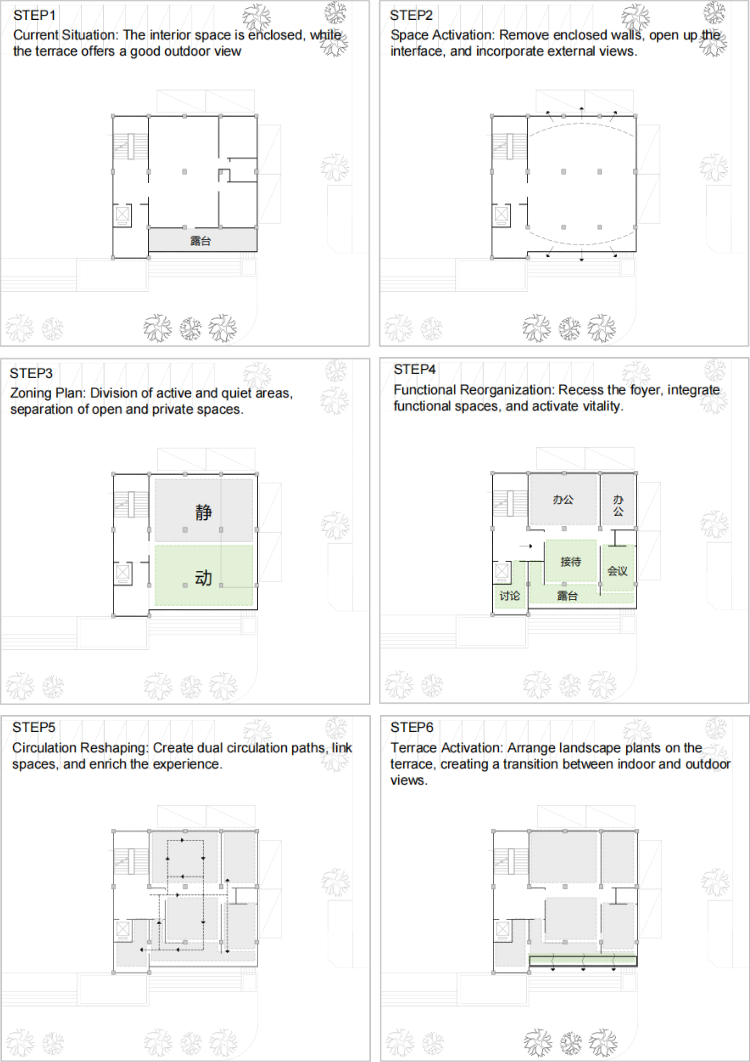
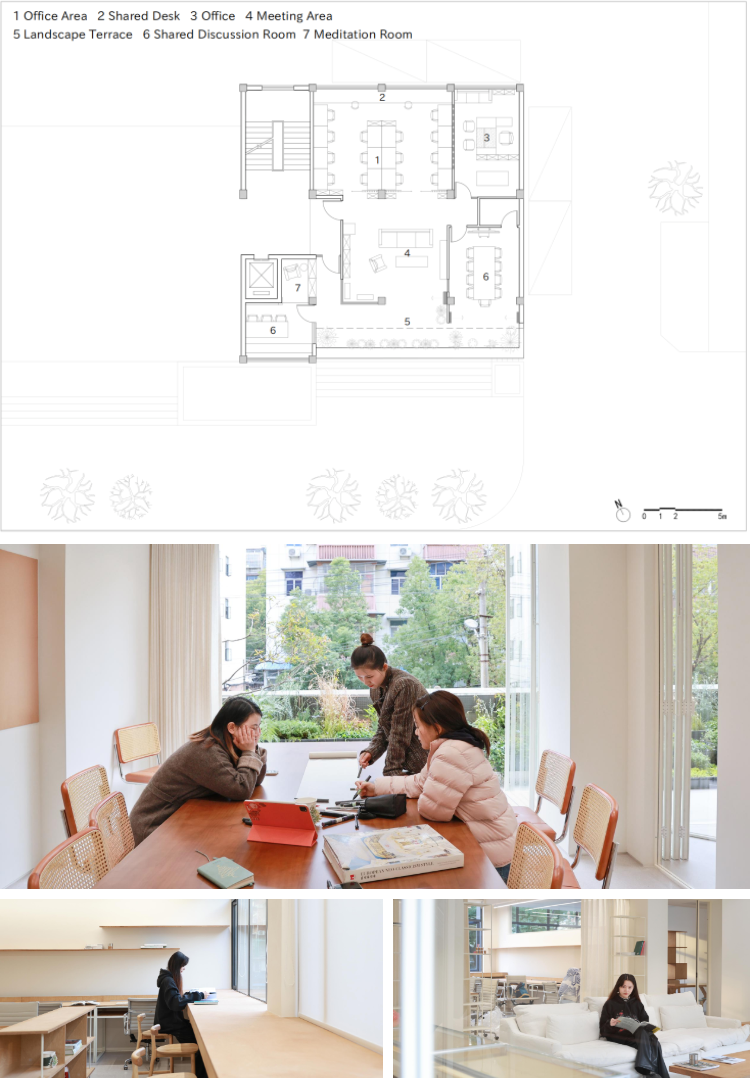
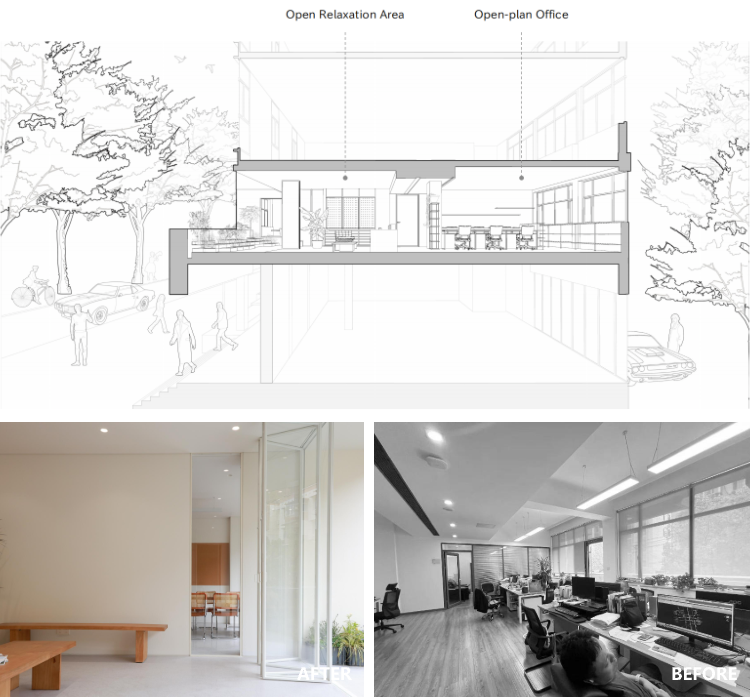
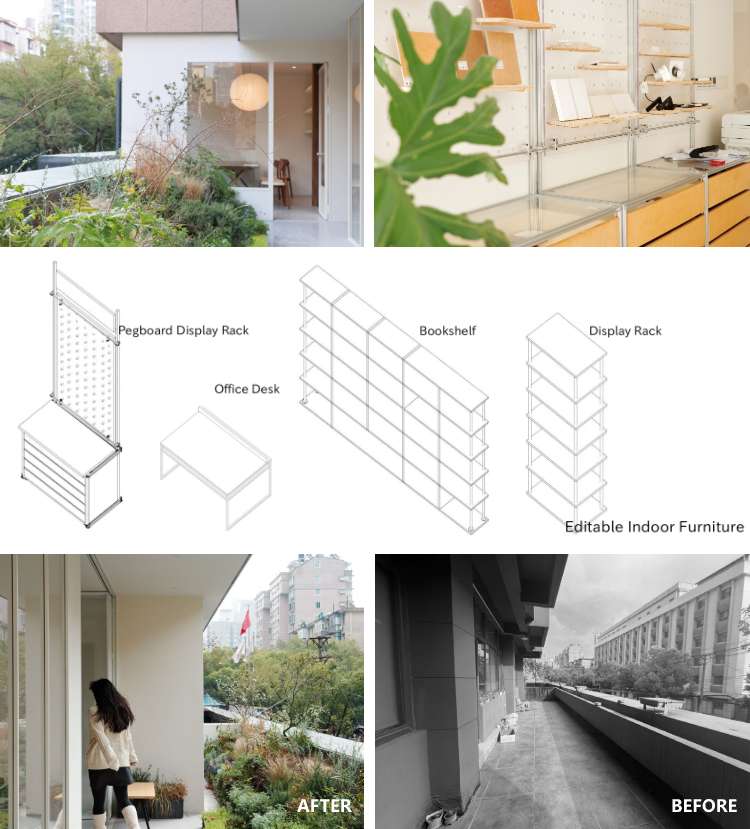
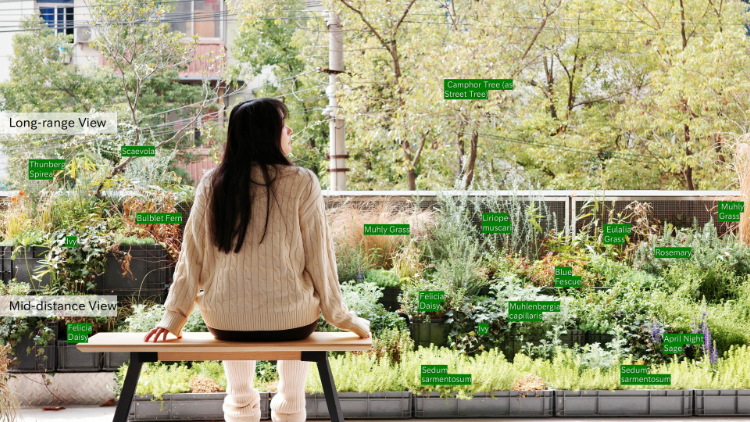
Action: A community life festival and retrospective exhibition marked the beginning of sustained operation of the No.66 Fung Choi Shop & Yo-Yo Garden. At the same time, an experimental office project exploring rooftop narratives was also underway.
行动:通过一场社区生活节和社区营造阶段性回顾展,66号风物店&友友花园开始了空间的可持续运营。同时一场关于露台叙事的办公场所实践也在进行中。
Deep, everyday interactions and a series of participatory design actions have allowed individual needs to be genuinely discovered and addressed.
日常的深度联结以及一系列参与式共创行动,让彼此的需求被真实发现。
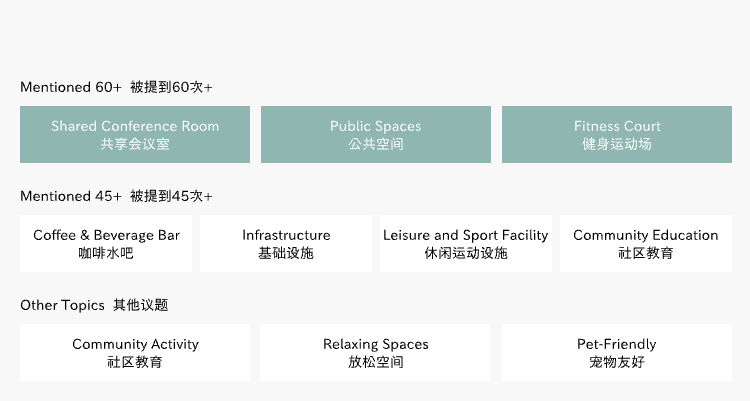
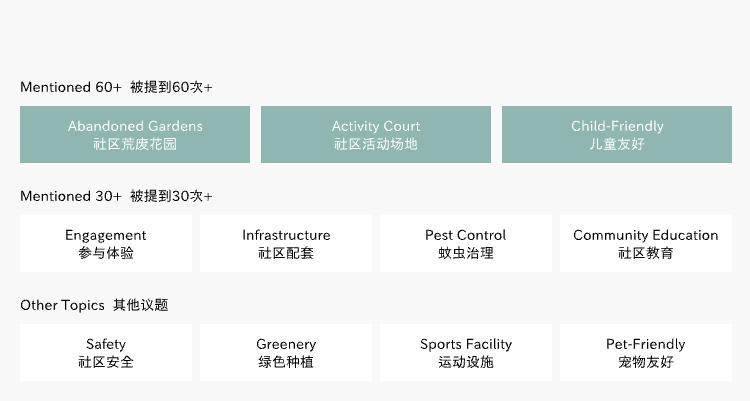
Demand of the Population
人群需求
Identified and summarized collective user needs based on multiple rounds of participatory
research conducted during the
66 Park Renewal Initiative
根据66公园更新行动大事件中的多次参与式调研,汇总人群需求
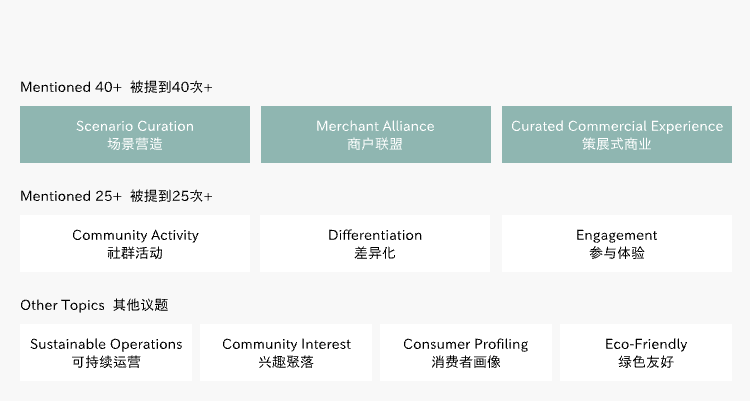
Value System
价值体系
Since the launch of the 66 Park Renewal Initiative in April 2024, a distinct value system has gradually emerged. 从2024年4月启动66号公园更新行动计划至今,逐渐形成66公园价值体系
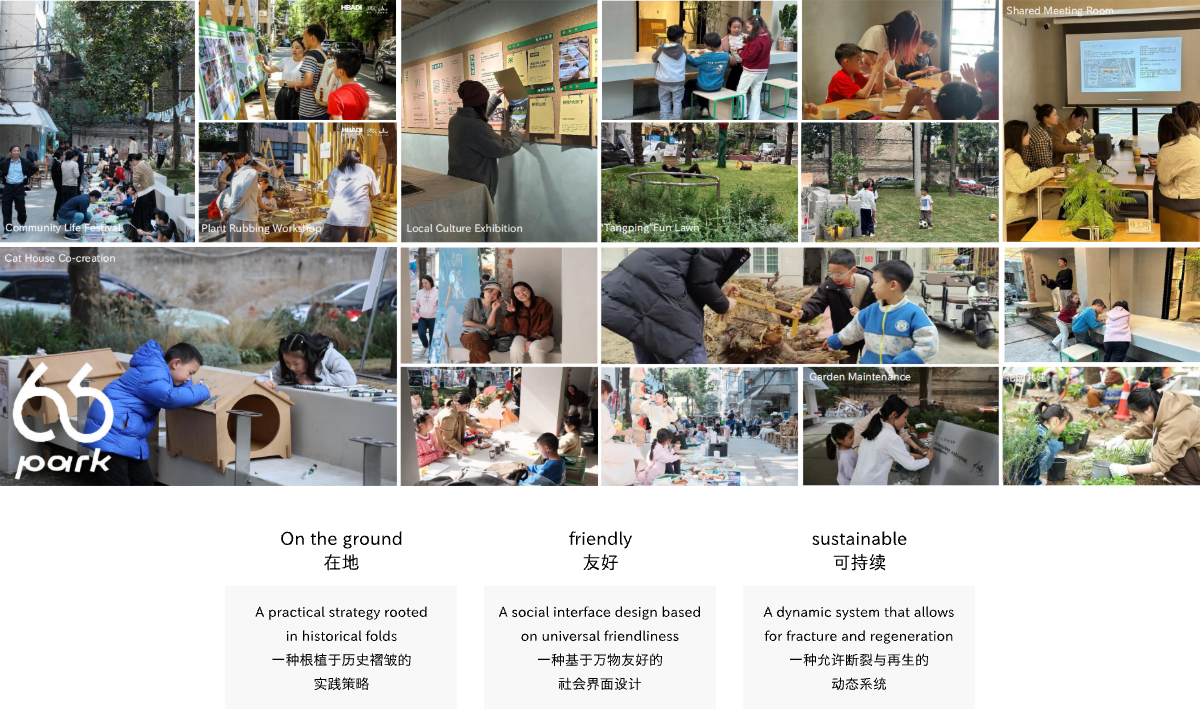
Community Ecology
社区生态